
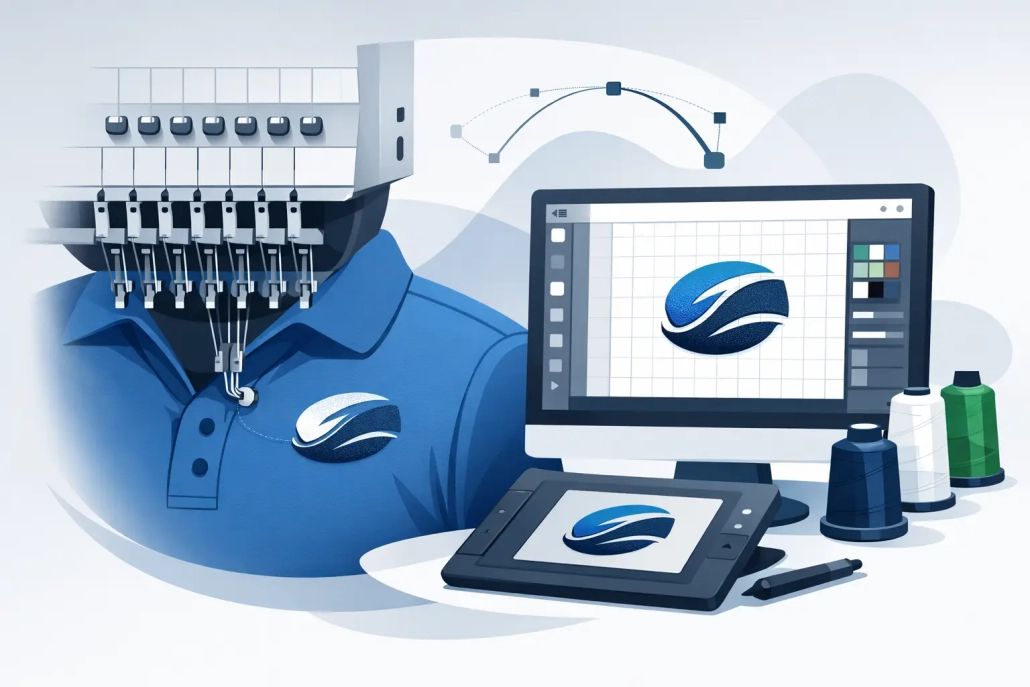
Left Chest Logo Digitizing Service That Works
A left chest logo digitizing service is usually tested at the worst possible time – when a client approves the polos, the deadline is tight, and there is no room for a bad sew-out. Small logo placement sounds simple, but left chest embroidery is one of the easiest places for poor digitizing to show up fast. Lettering closes up, details blur, and the design that looked clean on screen starts fighting the fabric the moment production begins.
That is why left chest digitizing is not just a file conversion job. It is a production decision. For apparel decorators, embroidery shops, and promotional product suppliers, the quality of that stitch file affects run speed, thread trims, garment appearance, and client satisfaction. When the design is handled correctly from the start, the job moves. When it is not, you lose time fixing issues that should never have made it to the machine.
Why left chest logo digitizing is its own category
Left chest embroidery has tight physical limits. Most designs need to fit within a compact area while still holding brand recognition. That means the digitizer has to simplify intelligently, control stitch density, and preserve the character of the logo without forcing tiny details that will not sew cleanly.
This is where a standard file conversion often falls short. A logo designed for print can include thin outlines, small type, soft gradients, and spacing that works beautifully on a business card or website. Embroidery does not read those details the same way. A proper left chest logo digitizing service adjusts artwork for the medium, not just the shape.
The challenge becomes even more noticeable on common left chest garments like polos, button-downs, soft shell jackets, and pique knits. These fabrics react differently under stitches. Push and pull compensation, underlay choice, stitch direction, and sequence planning all matter more than many buyers realize. Good digitizing protects the logo. Great digitizing also protects production.
What a reliable left chest logo digitizing service should deliver
Speed matters, but speed without consistency creates more work downstream. The right service should give you a file that is ready to run, not a file that needs testing, editing, and repeated adjustments before it becomes usable.
A dependable left chest logo digitizing service should start with readability. If the logo includes text, the digitizer needs to know when to resize, when to open spacing, and when to recommend practical edits. Some artwork simply cannot be stitched at left chest size exactly as drawn. Pretending otherwise helps nobody. A professional service makes the file production-friendly while keeping the brand intact.
It should also deliver balanced stitch construction. Dense fills may look solid in software, but on garments they can create puckering, thread breaks, and unnecessary bulk. On the other hand, reducing density too aggressively can leave gaps and weak coverage. The right balance depends on logo shape, fabric type, backing, and final application.
Clean sequencing is another sign of quality. Efficient stitch paths reduce trims and machine stops, which matters when you are running multiple garments on a deadline. Better sequencing also helps keep registration accurate, especially in smaller logos where slight movement can throw off the entire appearance.
Then there is file compatibility. A production-ready service should understand the machine formats decorators use every day and prepare files accordingly. That sounds basic, but mismatched formats and poor file setup still create avoidable delays in busy shops.
Small logos create big quality problems when digitizing is rushed
A large design can hide minor flaws. A left chest logo usually cannot. The size is too compact, and the placement is too visible. That is why rushed work tends to show up immediately in this category.
One common issue is text that was never truly digitized for embroidery scale. Letters may technically exist in the file, but they close up during stitching or become unreadable at normal viewing distance. Another problem is excessive detail. Tiny borders, layered elements, and narrow gaps may look accurate to the original art, but they add no value if they sew as a blur.
There is also the issue of fabric behavior. A left chest file that runs acceptably on a stable twill may struggle on a stretchy polo. This is where experienced digitizers make better decisions. They know the design is not living in isolation. It is going on a garment, through a machine, under real production conditions.
For buyers managing repeat jobs, consistency matters just as much as individual quality. If the same customer orders polos this month and jackets next month, you need files that hold up across applications or can be adjusted quickly with a clear production mindset. That kind of reliability is what makes outsourcing efficient instead of frustrating.
Flat-rate pricing matters more than most shops admit
For common embroidery placements like left chest logos, predictable pricing is a business advantage. It helps decorators quote faster, protect margin, and keep workflow simple for sales teams and production managers.
A flat-rate left chest logo digitizing service removes the guesswork that slows ordering down. Instead of waiting for custom quotes on routine jobs, shops can move quickly and keep projects on schedule. That matters when your client expects a proof, an approval, and production to happen inside a narrow timeline.
Affordable pricing also supports volume. Many shops are not ordering one design at a time forever. They are handling recurring corporate apparel, teamwear, uniform programs, and promotional runs. In that environment, digitizing is not a one-off creative expense. It is an operational cost that needs to stay controlled without sacrificing quality.
Low pricing by itself is not enough, of course. If a cheap file causes downtime, edits, and rejected garments, it was not actually cheap. The real value comes from combining reasonable rates with stitch quality, fast turnaround, and dependable support.
Fast turnaround is only useful when the file is right
Many buyers need artwork turned around in hours, not days. That is normal in decorated apparel. Sales close late, approvals come in after business hours, and production schedules change fast. A digitizing partner that can keep pace with those demands becomes part of your operation, not just an outside vendor.
Still, turnaround claims only matter when the final file performs. A fast delivery that leads to a failed sew-out does not save time. It creates a second deadline. That is why experienced shops look for both speed and execution.
A strong production partner understands this pressure. The goal is not simply to send a DST file quickly. The goal is to send a clean, efficient file that gives your team confidence when the garments hit the hoops. That balance of responsiveness and quality is where outsourcing starts paying off.
For businesses handling steady order volume, 24/7 availability is another practical advantage. Jobs do not always arrive during office hours, and decorators often need support when they are actively preparing production. Responsive service helps prevent idle time and keeps the schedule moving.
Choosing a service partner instead of just buying a file
There is a difference between a provider that sells digitizing and a provider that supports embroidery production. The first gives you an output. The second understands your pressure, your deadlines, and the cost of preventable errors.
When evaluating a left chest logo digitizing service, look beyond marketing claims. Pay attention to whether the team understands small-format logo behavior, garment variables, readability issues, and the need for practical file preparation. Ask yourself whether they are set up for repeat business, not just occasional orders. If your shop depends on reliable turnaround and consistent sew quality, that distinction matters.
This is where a specialized service company has an edge. High-volume experience often leads to better judgment on common left chest problems because the team has seen the same failure points across many industries, logos, and garment types. That experience tends to show up in cleaner files, faster handling, and fewer production surprises.
UltraEMB is built around that kind of support model – fast delivery, accessible pricing, and production-focused execution for shops that need dependable artwork services without adding in-house bottlenecks.
A left chest logo may be small, but it carries a lot of weight. It often sits on uniforms, corporate wear, retail apparel, and branded merchandise where clients expect a polished result every time. If the file is done right, the job feels easy. That is exactly the point.
 +1 (208) 473-5575 Extension #800
 +44 191 308 5011
 designs@ultraemb.com


Leave a Reply
Want to join the discussion?Feel free to contribute!