
Embroidery Digitizing vs In-House: What Wins?
A rush left-chest logo comes in at 2:15 p.m. Then a cap order lands. Then a jacket back with fine details that will not forgive bad stitch logic. That is where the real embroidery digitizing vs in house decision shows up – not in theory, but on a production schedule.
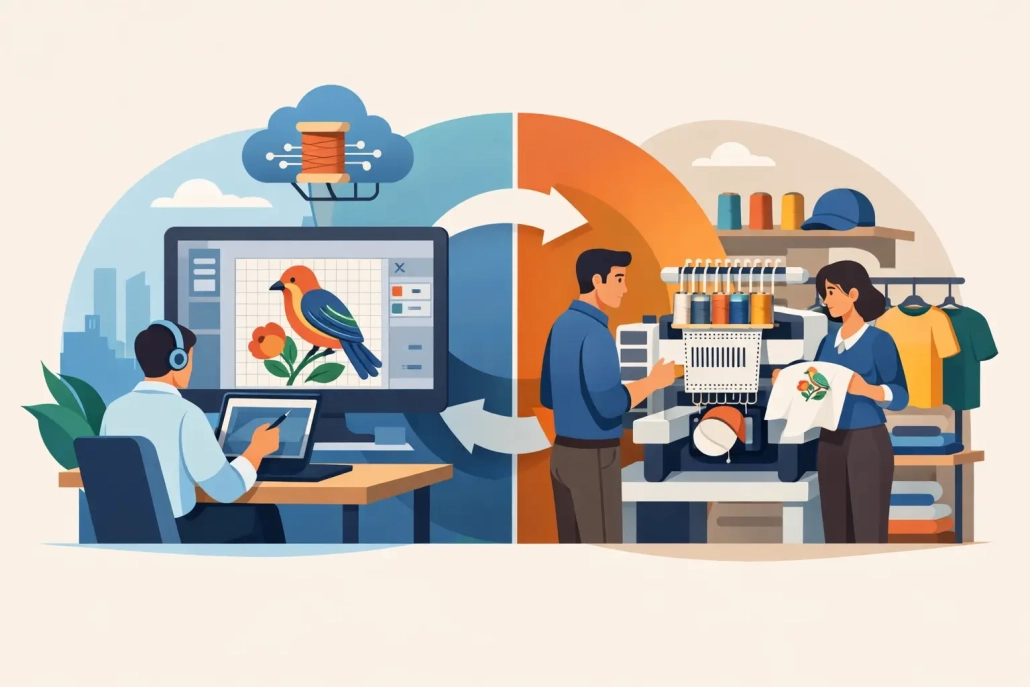
For embroidery shops, apparel decorators, and branded merchandise teams, this choice is less about preference and more about throughput, margin, and risk. Keeping digitizing in-house can give you direct control and instant access. Outsourcing can give you speed, specialized expertise, and room to scale without adding payroll. The right answer depends on what your shop runs every day, how often artwork complexity changes, and how much production pressure your team carries.
Embroidery digitizing vs in house: what the decision really means
This is not simply a question of who clicks the software. Digitizing affects sew quality, machine efficiency, thread breaks, push and pull compensation, underlay strategy, and how clean a logo looks on different fabrics. When the file is wrong, production feels it fast.
In-house digitizing means your team owns the software, staffing, training, revisions, and file preparation from start to finish. That can work well if you have consistent volume, an experienced digitizer, and enough buffer in the schedule to handle urgent edits.
Outsourced digitizing means a specialist prepares the file remotely and sends back a production-ready result. For many shops, that reduces labor pressure and helps them handle specialty jobs without turning every difficult design into an internal bottleneck.
Where in-house digitizing makes sense
If your shop runs a high volume of similar jobs, in-house digitizing can be efficient. A strong internal digitizer learns your machines, your preferred densities, your backing choices, and how your team likes logos to sew on polos, caps, and outerwear. That familiarity can shorten revision cycles and improve consistency.
There is also a control advantage. When a customer calls with a quick text change or a slight size adjustment, someone in your building can often respond immediately. For shops with a dedicated art department, that speed feels valuable.
But the benefits depend heavily on staffing quality. Good embroidery digitizers are skilled technicians, not just software operators. They need experience with stitch types, pathing, compensation, and fabric behavior. If your internal team is strong, in-house can be a real asset. If your digitizer is overloaded or still learning, the same setup can slow everything down.
The hidden cost of keeping it in-house
Many shops compare outsourcing rates to hourly payroll and assume in-house is cheaper. That is rarely the full picture. In-house digitizing also includes software subscriptions or licenses, training time, management oversight, test sew-outs, paid revisions, sick days, turnover, and lost production time when artwork backs up.
Then there is opportunity cost. If your production manager, machine operator, or sales team keeps waiting on artwork, you are not just spending money on digitizing. You are delaying invoicing and tying up capacity that should be generating revenue.
For shops with uneven order flow, this matters even more. Slow weeks make an internal digitizing payroll feel expensive. Busy weeks make the same department feel understaffed.
Why many shops outsource embroidery digitizing
Outsourcing works best when speed, flexibility, and specialized execution matter more than having every step under one roof. That is why so many embroidery businesses use external digitizing support even when they have internal production teams.
A reliable digitizing partner gives you access to experienced talent without the overhead of building a full-time department. That matters on technical work like caps, jacket backs, patches, and towels, where the wrong approach can create real production problems. Specialty files often need a digitizer who understands how the design should run before the machine ever starts.
The biggest advantage, though, is scale. When order volume jumps, outsourced support lets you keep taking work without forcing your internal team into overtime or rushed file prep. If your business handles seasonal spikes, agency orders, rush jobs, or mixed decoration requests, flexibility is not a bonus. It is operating protection.
Speed is not just convenience
Fast turnaround changes how a shop sells. When you can get a digitized logo back in hours instead of days, you can quote faster, approve faster, and move jobs into production faster. That helps you win deadline-sensitive work and keep customers from shopping around.
This is especially useful for decorators who do not want digitizing to become a choke point. A fast outsourced workflow can support your production team instead of slowing it down. UltraEMB, for example, is built around quick, flat-rate service for common design types and high-volume support, which is exactly what many busy shops need when artwork demand is constant.
The quality question: control vs expertise
Some businesses assume in-house always means better quality because the work stays internal. In practice, quality depends on who is digitizing the file and how much embroidery-specific knowledge they bring to the job.
An experienced outsourced digitizer may produce a better-running file than an in-house generalist, especially on complex logos or difficult materials. That is not a knock on internal teams. It is just the reality that embroidery digitizing is specialized work.
At the same time, not all outsourcing is equal. If your provider is inconsistent, hard to reach, or unfamiliar with production realities, revisions can erase the time you thought you were saving. That is why partner selection matters. Shops need predictable turnaround, responsive support, and digitizers who understand production, not just design.
Cost, margin, and the real shop math
The embroidery digitizing vs in house comparison usually comes down to economics. Shop owners want to know which option protects margin without creating new headaches.
If your order volume is steady and high enough to fully utilize an in-house digitizer, internal staffing can make financial sense. If your volume fluctuates, or if your jobs vary from simple logos to technical cap files and oversized backs, outsourcing often gives you a cleaner cost structure. You pay when you need the service, not every hour regardless of workload.
Flat-rate pricing also helps. Predictable artwork costs make quoting easier and reduce internal debate over whether a file adjustment is worth the labor. For many decorators, that simplicity is a real operational advantage.
When hybrid is the smartest move
This does not have to be all or nothing. Many of the strongest shops use a hybrid model.
They keep simple edits, repeat files, or basic name drops in-house. Then they outsource complex logos, specialty placements, overflow work, and rush requests. That setup gives them internal control where it matters and outside capacity when demand spikes.
A hybrid approach also lowers hiring pressure. You do not need to build a large art department before your order volume can support it. You can stay lean, keep service levels high, and still take on more work.
How to decide what fits your shop
If your business is evaluating embroidery digitizing vs in house, start with your actual workflow, not assumptions. Look at how many files you process each week, how often your jobs require advanced digitizing, how many revisions your team handles, and how often production waits for artwork.
If you have stable volume, an experienced internal digitizer, and enough capacity to absorb rush jobs, in-house may be the right long-term fit. If artwork regularly slows production, if specialty jobs create stress, or if hiring skilled digitizers feels difficult, outsourcing is likely the stronger business move.
Also pay attention to customer expectations. Buyers want quick approvals, clean sew-outs, and dependable lead times. They do not care whether the file was created in your office or by an outside partner. They care that the finished product looks right and ships on time.
The better question is not which is better
The better question is which model helps your shop stay profitable, responsive, and consistent. For some businesses, that is a fully in-house setup. For many others, it is outsourced support backed by a reliable production partner. And for plenty of growing decorators, it is a mix of both.
Good digitizing should make production easier, not more fragile. If your current setup creates delays, quality issues, or unnecessary overhead, that is your answer. Choose the model that keeps your machines moving, your team focused, and your customers confident enough to place the next order.
 +1 (208) 473-5575 Extension #800
 +44 191 308 5011
 designs@ultraemb.com


Leave a Reply
Want to join the discussion?Feel free to contribute!