
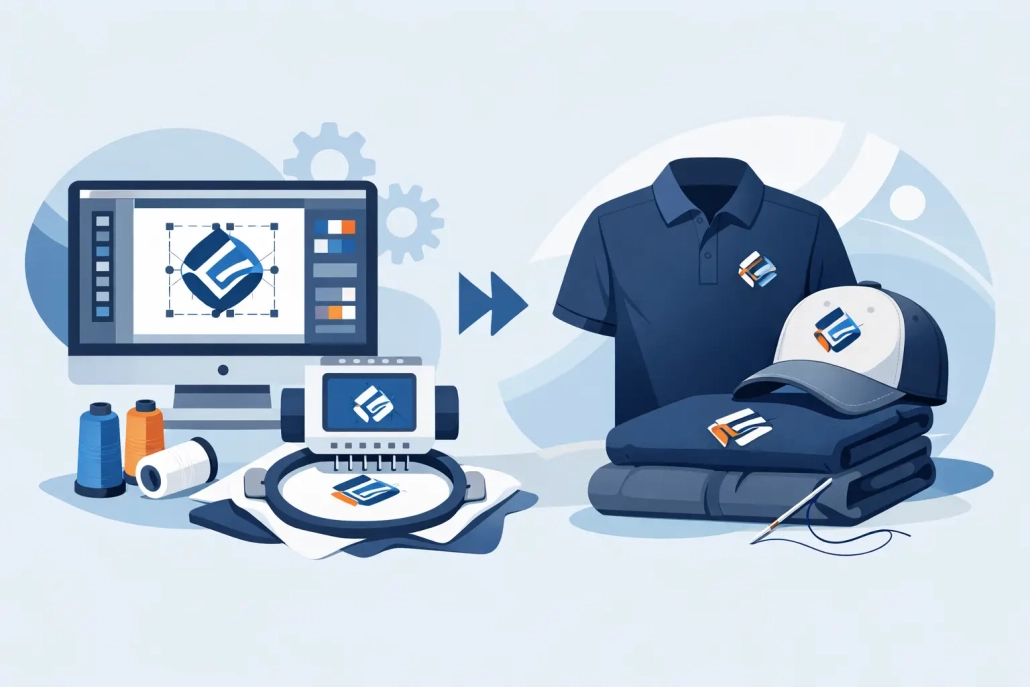
Logo Digitizing for Uniforms That Works
A uniform logo can look sharp on a screen and still fail on the machine. That is why logo digitizing for uniforms matters so much in real production. When a design is built specifically for embroidery on polos, jackets, caps, and work shirts, you get cleaner stitching, better readability, and fewer surprises once the order hits the floor.
For shops handling client deadlines, repeat programs, and brand standards, digitizing is not a background task. It directly affects sew quality, run speed, thread breaks, fabric distortion, and customer satisfaction. A logo that is digitized well helps production move faster. A logo that is digitized poorly costs time, materials, and trust.
Why logo digitizing for uniforms is different
Uniform embroidery has less room for error than many one-off decoration jobs. These logos often need to run across multiple garment types while keeping the same brand identity. A left chest logo on a polo does not behave the same way on a soft shell jacket, structured cap, or heavyweight work shirt.
That difference starts with fabric and construction. Pique polos have texture that can swallow fine detail. Jackets may need stronger underlay and better pull compensation. Caps bring curve, seam placement, and limited height into the equation. If the file is not prepared for the actual garment, the result may look uneven, crowded, or flat.
The logo itself also matters. Corporate marks are often designed for print, web, and signage first. Those files may include thin outlines, tiny text, gradients, or layered effects that do not translate directly to thread. A skilled digitizer does not simply trace the art. They rebuild it for stitch logic, readability, and machine performance.
What good uniform digitizing actually delivers
The first thing buyers notice is visual consistency. A clean file keeps the logo balanced and legible across repeat runs, which is critical for schools, staff apparel, hospitality programs, healthcare uniforms, and corporate branding.
The second benefit is production stability. Good digitizing reduces trims, unnecessary color changes, thread breaks, and registration problems. That means less operator intervention and fewer rejects. On high-volume jobs, those gains add up fast.
There is also a branding advantage. Uniforms are worn in public, often every day. If the embroidery puckers, letters fill in, or shapes lose definition, the brand suffers. Strong digitizing protects the look of the logo where it is most visible – on the people representing the business.
The key decisions behind logo digitizing for uniforms
A production-ready embroidery file is built through a series of technical choices, not guesswork. Stitch type is one of the first. Satin stitches can create a polished look for borders, lettering, and narrow columns, but they have width limits. Fill stitches work better for larger areas, though they need proper angle control and support to avoid a loose or heavy finish.
Underlay is just as important. On uniform fabrics, underlay helps stabilize the material, lift top stitching, and improve edge clarity. Too little underlay and the logo can sink into the garment. Too much and the design becomes bulky.
Density needs the same balance. A file that is too dense may look compact on screen but can create stiffness, thread breaks, and puckering in production. A file that is too light may show fabric through the stitching or lose impact. The right setting depends on the logo, the thread, the backing, and the garment.
Pull compensation is another factor that separates basic digitizing from professional work. Stitches pull as they form, which can close open spaces and narrow columns. On uniforms, where logos often include small text and clean geometric shapes, this adjustment is essential.
Common problems caused by poor digitizing
Many embroidery issues get blamed on the machine, but the file is often the real problem. Small text that fills in, outlines that do not line up, circles that turn oval, and uneven coverage are common signs of weak digitizing.
Uniform applications expose these mistakes quickly. A chest logo may look acceptable on one sample and then fail across a 48-piece order because the file was never optimized for that fabric. Caps are even less forgiving. If the sewing sequence ignores center-out logic or does not account for cap structure, the result can shift badly.
Another common issue is overcomplication. Some files contain more trims, layers, and stitch changes than the design actually needs. That slows production and increases the chances of error. For busy shops, simplicity with control is usually better than excessive detail that does not survive the sewout.
How to prepare a logo for uniform embroidery
The best results start with the right artwork. Clean vector art or a high-quality raster file gives the digitizer a better foundation. If the source image is blurry, compressed, or low resolution, the embroidery file may still be usable, but the decision-making takes longer and the result may require simplification.
Size should be defined early. A left chest logo, a cap front, and a jacket back are not the same job. Each placement may need its own file rather than a single scaled version. Scaling embroidery files up or down without adjustment can affect stitch width, coverage, and detail.
Garment information also matters more than many buyers expect. Fabric type, placement, backing preference, hoop limitation, and target machine brand can all influence the final build. The more accurate the production details are at the start, the fewer revisions are needed later.
When outsourcing makes the most sense
For many decorators, keeping digitizing in-house sounds efficient until volume picks up. Then it becomes a bottleneck. Uniform orders tend to come with hard deadlines, client approvals, and repeat expectations. If the internal team is already stretched with quoting, production, and shipping, digitizing can slow everything down.
Outsourcing solves that when the partner understands production, not just artwork. Fast turnaround is valuable, but speed alone is not enough. The file has to run cleanly, hold quality across garments, and be delivered in the right format for the machine setup.
This is where a service partner with dedicated embroidery digitizing capacity can make a real difference. UltraEMB supports embroidery businesses and apparel decorators that need flat-rate, production-ready files without tying up internal staff. For shops managing ongoing uniform programs, that kind of responsiveness can protect both deadlines and margins.
What buyers should look for in a digitizing service
A reliable provider should understand application-specific embroidery, not just general logo conversion. Uniform work often includes left chest logos, cap files, jacket backs, patches, and specialty placements. Each one calls for different logic.
Consistency is another major factor. If you handle recurring client accounts, you need a service that can deliver the same standard across repeat orders. That includes clean pathing, proper compensation, readable text, and practical stitch counts.
Support matters too. Sometimes a file looks right in approval and still needs adjustment after a test run on a specific garment. A responsive digitizing partner helps resolve those issues quickly so your production line keeps moving.
Price should be clear and predictable. Shops do not want vague billing on routine logo work. Reasonable flat-rate pricing is especially useful when estimating standard placements like left chest and cap designs.
Better files make better uniform programs
Uniform embroidery is not only about making a logo stitch. It is about making that logo repeatable, readable, and efficient to run across real production conditions. When the digitizing is done right, your team spends less time troubleshooting and more time shipping quality work.
That is the real value of strong logo digitizing for uniforms. It protects the brand on the garment, keeps production under control, and gives your shop a better chance to deliver on time without sacrificing quality. If your next uniform order needs to run clean from the first sample to the final carton, the file is where that result starts.
 +1 (208) 473-5575 Extension #800
 +44 191 308 5011
 designs@ultraemb.com


Leave a Reply
Want to join the discussion?Feel free to contribute!